


Hello!
This is the online home of the Seascape Ecology Lab. Our interests reside at the interface of animal biology, marine ecology, environmental data science, and simulation modeling. We seek to understand how interconnected marine communities respond to global climate changes, and how best to conserve and restore natural marine resources in an uncertain future.
The Seascape Ecology Lab has moved to Stony Brook University!
⇩

Research
-
Our research revolves around the concept of connected metapopulations. Metapopulations are networks of connected sub-populations. But what connects them? For many marine organisms, these sub-populations are connected by larvae dispersing on ocean currents. In others, adult individuals may move between populations. How connected a metapopulation is – or will be in the future – can determine whether or not it will persist in time and space. We're interested in the application of metapopulation theory to the study and conservation of marine and coastal organisms, and in developing a metapopulation theory of the coastal ocean. Among many ongoing projects, we have an NSF-funded project modeling the effects of climate change on the dispersal and persistence of Florida’s stone crab.
-
Marine larvae are tiny, and notoriously difficult to keep track of. How do we know where larvae from one reef will end up? How do we know where adults on another reef came from? What proportion of adults were born and live in the same place? One way to tackle this complicated set of questions is through larval dispersal modeling. We integrate organismal and larval biology with hydrodynamic models, and use Lagrangian particle tracking to develop probabilities of dispersal and connectivity between habitats.
-
For marine organisms that disperse as larvae, we have an opportunity to inform connectivity and metapopulation modeling by looking at adult reproductive strategy and fecundity, and larval biology and behaviors. For example, we collect coral tissues and utilize reproductive histology and microscopy to investigate the development of gametes in corals in different environments. We also measure minute behaviors of marine larvae throughout development to inform our biophysical modeling.
-
The Seascape Ecology Lab is a part of an NSF EEID-funded effort to understand the transmission and spread of a Stony Coral Tissue Loss Disease in the US Virgin Islands, as well as in Florida with support from Florida’s Department of Environmental Protection. We are looking at multi-species disease signs in coral tissues, and modeling the spread of this disease through coral metacommunities. Previous funding has included three years of support from the Louisiana State Board of Regents to integrate models of coral reproduction, disease, and metapopulation persistence, and NSF RAPID support.
-
Refuges, or refugia, are habitats that are consistently removed from a stress or perturbation. In the case of coral reefs, deeper mesophotic reefs may be one example. Their depth and distance from shore allows corals and associated plants and animals to live in slightly cooler, darker, and less polluted water. But in order for refuges to support metapopulation persistence, connectivity - or the exchange of larvae - must occur at levels that exceeds extinction rates. We're interested in the characterization and mapping of reef refugia, how environmental conditions on mesophotic reefs affects the physiology of reef organisms, and population and community dynamics in these under-explored ecosystems.
-
Through a partnership with Rare’s Fish Forever Initiative (NGO), the Seascape Ecology Lab aids in the design of equitable and fishable marine managed areas in the Philippines, Mozambique, Indonesia, and Central America.
-
National Science Foundation RAPID - Award #2316580 “RAPID: Collaborative Research: Predicting the Spread of Multi-Species Coral Disease Using Species Immune Traits”.
National Science Foundation EEID - Award #2109622 - “A multi-scale approach to predict multi-host disease spread in marine benthic communities”.
National Science Foundation OCE-BIO - Award #2049047 - “Larval orientation, dispersal and connectivity in a brachyuran crab under ocean acidification and elevated temperature”
National Oceanographic and Atmospheric Administration Regional Ecosystem Research Program - “Habitat requirements and ecosystem connectivity of reef-associated fishes in the Gulf of Mexico”
National Science Foundation RAPID - Award #1928771 “RAPID: Collaborative Research: Predicting the Spread of Multi-Species Coral Disease Using Species Immune Traits”.
National Science Foundation VI-EPSCoR RII Track-1: “Ridge to Reef Processes and Interdependent Drivers of Small Island Resilience”.
Florida Department of Environmental Protection - “Extending biophysical and epidemiological simulations of SCTLD on the Florida Reef Tract I & II”.
Florida Department of Environmental Protection - “Coral larval vertical buoyancy/behavior throughout dispersal”.
Louisiana Board of Regents Research Competitiveness Subprogram - “Deep coral refuges in the contexts of emergent disease and reproductive capacity”.
Rare - Contributing Scientist - “Larval Dispersal Modeling for Reserve Design”.
Meet the Team
-

Dan Holstein
Dan is an Associate Professor in the School of Marine and Atmospheric Sciences at SUNY Stony Brook. Previously he was an Associate Professor in the Department of Oceanography & Coastal Sciences at Louisiana State University. He received his PhD in 2013 from the University of Miami's Rosenstiel School of Marine and Atmospheric Science. Dan is a coral reef ecologist, a biophysical and ecological modeler, and a technical rebreather diver.
-

Alex Good - Postdoctoral Research Associate
Alex earned her Ph.D. in Marine Biology from Texas A&M University–Corpus Christi in 2025. Her dissertation examined how local and global stressors influence the physiology of the Hawaiian rice coral and the Texas Eastern oyster. In addition to her experimental work, she developed a high school science curriculum to engage underrepresented students in STEM. She holds a BSc (2017) and an MSc (2020) in Marine Science from the University of Delaware. Her master’s research, conducted in Fiji, tested the use of 3D-printed corals in reef restoration. Before graduate school, Alex taught 8th-grade science at Roxbury Prep Charter School in Boston, where she discovered her passion for teaching and science communication. Originally from Cape Cod, she has been inspired by the ocean since childhood and aspired to be a marine biologist from the age of eight.
-

Hannah Craft - Doctoral candidate
Hannah received their bachelor’s degree in Marine and Environmental Biology and Policy and in Chemistry from Monmouth University. Hannah’s research interests include crustacean ecology, impacts of anthropogenic climate change, fishery sustainability, and scientific outreach and education. They are pursuing their PhD with the Seascape Ecology Lab investigating the impacts of ocean acidification and rising water temperatures on the development, behavior, and distribution of larval Florida stone crab. Outside of the lab, Hannah enjoys hiking, making pottery, rock climbing, and thrifting.
email: hcraft2@lsu.edu
-

Anushka Rajagopalan - Doctoral student
Anushka (she/her/hers) received her Bachelor’s degree in Ecology and Evolutionary Biology from Northeastern University (2024) and a Master’s degree in Marine Systems and Policies from the University of Edinburgh (2025). Her research to date has focused on coral responses to environmental stressors, including published work on tropical coral bleaching under thermal and hypoxic conditions as well as examining the impacts of ocean acidification on deep-sea cold-water corals. Anushka is pursuing a PhD in the Seascape Ecology Lab, where she aims to explore how coral larval traits and behaviors affect patterns of dispersal, retention and connectivity among reef systems. Outside of research, Anushka enjoys yoga, reading, knitting, photography, and hiking.
-
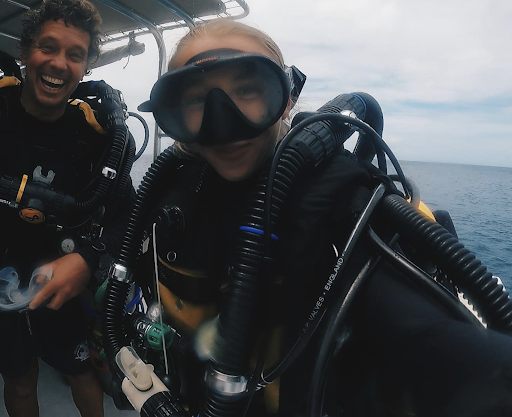
Rachel Tanaka - Doctoral student
Rachel received her Bachelor's Degree in Marine Vertebrate Biology with minors in Geospatial Sciences, Ecosystems and Human Impact, and South Asian Studies from Stony Brook University. During her time as an undergraduate student, Rachel worked across several SoMAS research labs as a research technician and participated in projects studying open water aquaculture systems, ecology of seagrass dominated ecosystems, water quality monitoring, and elasmobranch telemetry. She is pursuing a PhD with the Seascape Ecology Lab and researching the impacts of various 3D printed biopolymer designs on larval settlement, post settlement mortality, and coral recruitment. In addition to her academic career, Rachel is a dive instructor, technical rebreather diver, and Director of Sciences at Save a Coral Foundation.
email: rachel.tanaka@stonybrook.edu
-
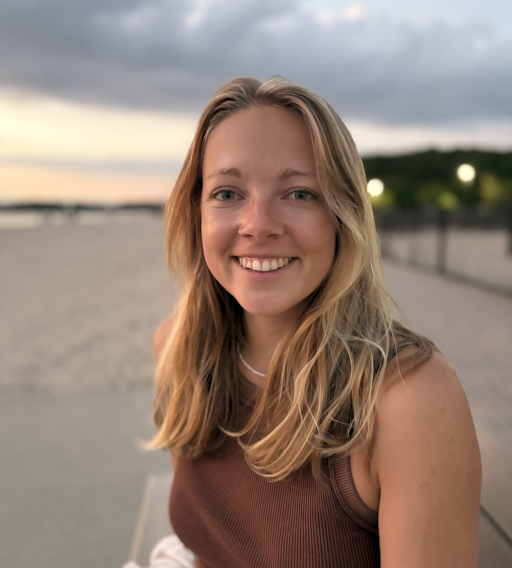
Allie Ouimet - Master's student
Allie earned her Bachelor's in Marine Science from the University of Maine in 2023 and has worked on research projects at Bigelow Laboratory in Maine and Silliman University in the Philippines. Previous projects have focused on zooplankton reproductive ecology, characterizing macroalgal-associated epifaunal communities, and speciating cryptic eel species in the Coral Triangle. She is now pursuing her MSc investigating coral reef-associated larval dispersal and connectivity. Alongside her research, she is an AAUS scientific diver and has worked at Catalina Island Marine Institute as a NAUI SCUBA instructor. Out of the water, she loves hiking, climbing, camping… anything to get her outside more!
-
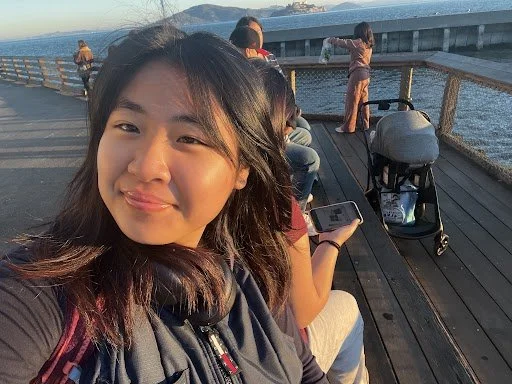
Sabrina Li - Undergraduate researcher
Hi! My name is Sabrina Li, and I’m currently a Marine Science major at SoMAS. My interest in marine science stems from watching Octonauts and numerous nature documentaries. Beyond that, spending summers in nature, away from New York City, deepened my appreciation for our environment. As a result, my general research interests are marine ecology and human interactions with the marine environment. One day, I would love to develop sustainable, environmentally friendly conservation and restoration strategies. This summer, I’m interested in working in the Seascape Ecology Lab to examine how the dynamics of marine communities/populations are changing due to human impact. On top of that, I’m excited to learn new skills such as coding and modeling, as well as setting up a Coral Lab at Flax Pond.
-
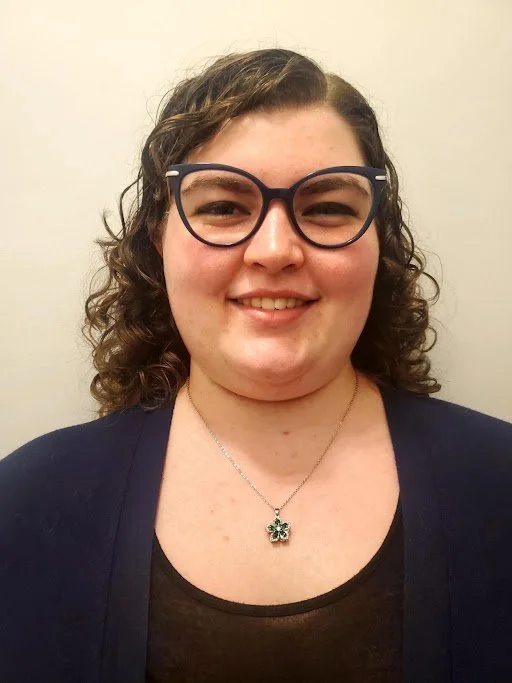
Ashley Ayres - Undergraduate researcher
Hello, I’m Ashley Ayres. I am a SOMAS undergrad working for the Seascape Ecology Lab. My path hasn’t been linear, but I am so happy that it’s led me here. I’ve loved otters since I was a kid and used to read about the ocean all the time. Eventually, I discovered that I could make a career out of it. I am interested in coral research, paleoceanography, and ocean sediments. Outside of this, I like to crochet, play video games, and chill with my cats and friends; I’ll listen
to any type of music, but am especially interested in alt rock and musical soundtracks -
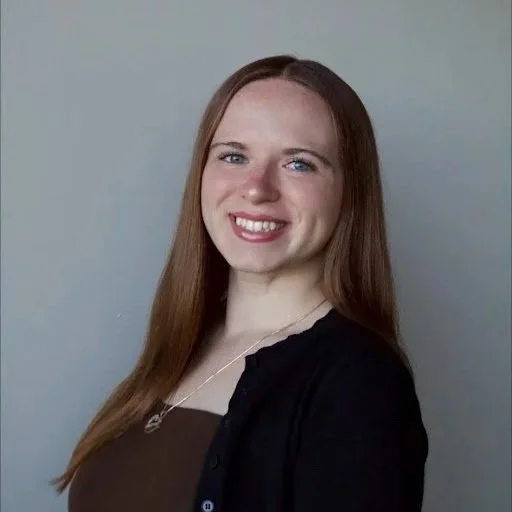
Julie Dorgan - Undergraduate researcher
Julie will graduate with a Bachelor of Science degree in Marine Sciences from Stony Brook University in 2028. Julie grew up always spending time in or near the water, whether it was the LI Sound, the ocean, rivers, or lakes. Her love for the marine world has grown alongside her. Outside the lab, she loves to whittle, hike, camp, and go to the gym.
Lab Alumni
-

Gaby Carpenter, PhD
Gaby received her bachelors degree in environmental science and economics from Colby College and masters in marine biology from Northeastern University. Her previous research focused on acclimatization and thermal stress on large benthic foraminifera in Taiwan as well as photoacclimatization in mesophotic corals in Little Cayman. Gaby is originally from Southern California where she first learned to scuba dive in the temperate kelp forests. Since that time, she received her certification as an open water scuba instructor as well as an open-circuit and closed-circuit technical diver. Her PhD in the Seascape Ecology Lab focused on the multiscale ecology of coral disease.
-

Ben Farmer, PhD
Ben is interested in the roles of community and seascape ecology in the transmission of marine infectious diseases. He completed a B.S. in Biology at the University of Kentucky in 2019, then worked with the School for Field Studies, Turks and Caicos Islands, as a Waterfront Assistant. There, Ben helped document a devastating outbreak of stony coral tissue loss disease (SCTLD). He followed the disease to LSU, where he employed multiscale epizootiological models to study SCTLD in Florida and the US Virgin Islands. When not underwater or in front of a computer, Ben makes time to enjoy the wonderful festival and music scenes of Louisiana.
-

Ashley Rossin, PhD
Ashley received her bachelor degree in Marine Science and masters in Marine Biology from the University of Maine. Her research interests include coral reproduction and anthropogenic effects on their reproduction, larval development, and energy consumption. She received her PhD with the Seascape Ecology Lab in 2024, focusing on the reproduction of depth-generalist corals in the U.S. Virgin Islands and the histopathology of Stony Coral Tissue Loss Disease. She is moving on to a postdoctoral position at the University of Miami’s CIMAS and NOAA’s AOML.
email: aross68@lsu.edu
-

Ben Limer, PhD
Ben received his bachelor's degree in marine science and biology in 2018 from the Rosenstiel School of Marine and Atmospheric Science at the University of Miami, and his PhD from the Seascape Ecology Lab at LSU in 2023.
-

Jeanne Bloomberg, M.Sc.
Jeanne Bloomberg completed her master’s studying coral reproduction across environmental gradients, and in the context of coral disease. She is broadly interested in coral reef restoration and understanding the future of coral reefs. Jeanne completed her B.S. at Northeastern University in marine biology, where she also completed the Three Seas Program. Jeanne completed a fellowship with the National Academy of Sciences, and entered the joint doctoral program at MIT and Woods Hole in Fall 2022. In her free time, she likes to do yoga and play with her dog.
-

Brittney Green - Graduated Undergraduate Lab Manager
Brittney Green was our first undergraduate lab manager, and led the lab’s NSF-funded research to investigate coral disease signs histologically. She studied marine biology and oceanography. Brittney grew up in San Diego which grew her love for marine sciences. After graduating culinary school and traveling she decided to pursue a career in biology.
-

Morgan Coleman
Morgan has graduated and is a technician for Keisha Barr at TAMU Corpus Christi!
-

Gillian Coleman
Gillian has graduated and joined Tyler Smith’s lab at the University of the Virgin Islands!
-

Annie Lamke
-

Aran Brancato
-

Emma Miranda

Image reproduced and edited with permission from Sammy Katta.
Undergraduate research opportunities
At any given time, we have ~2-10 undergraduates in the lab, assisting our graduate students, and/or conducting independent research. Please get in touch regarding undergraduate research opportunities.
Interested in joining the lab as an undergraduate, M.Sc., Ph.D., or postdoc? Feel free to reach out and discuss your interests in marine ecology.
Selected publications